Doctoral Workshop

Doctoral Workshop on Research in Digital Learning

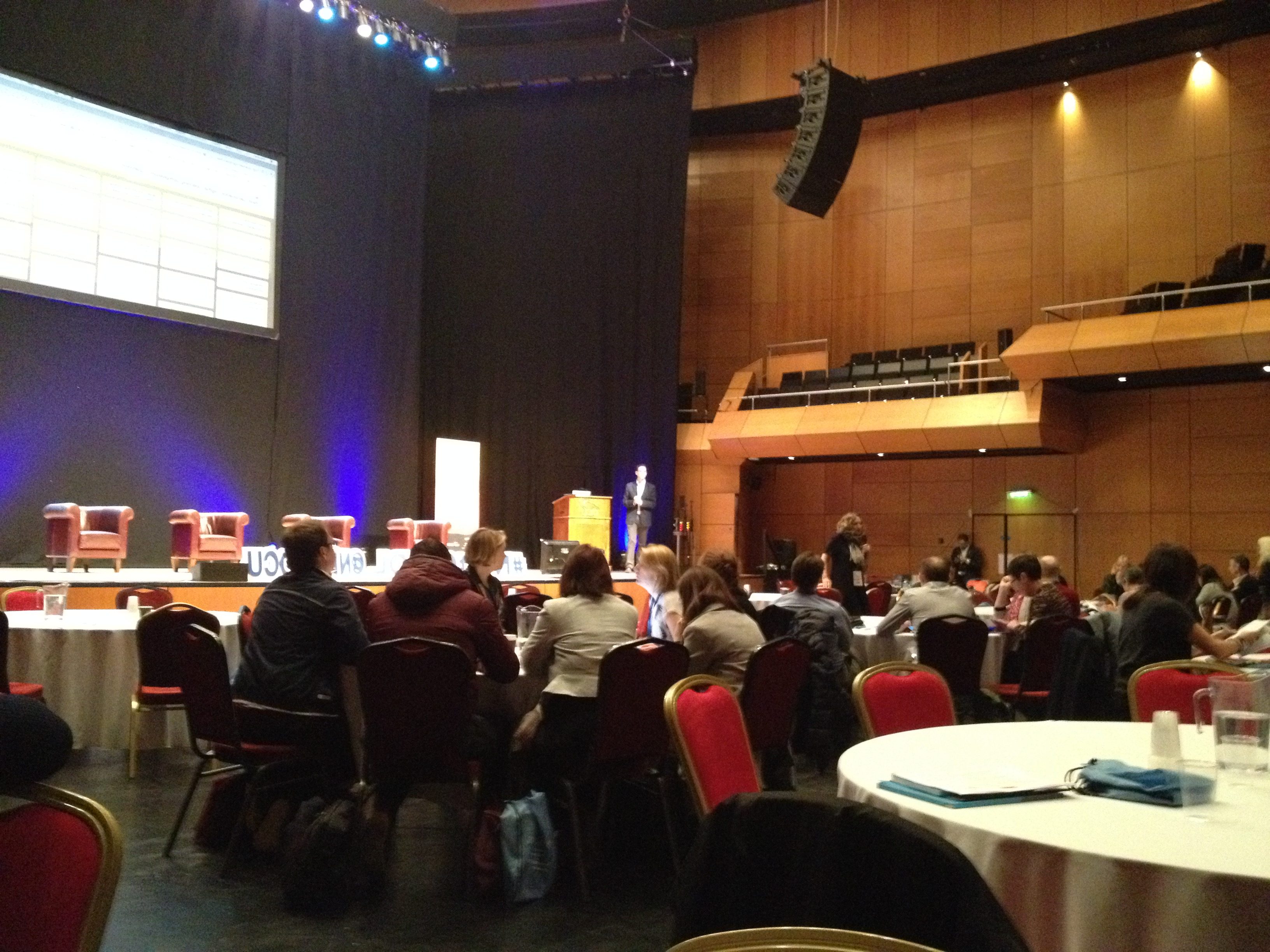
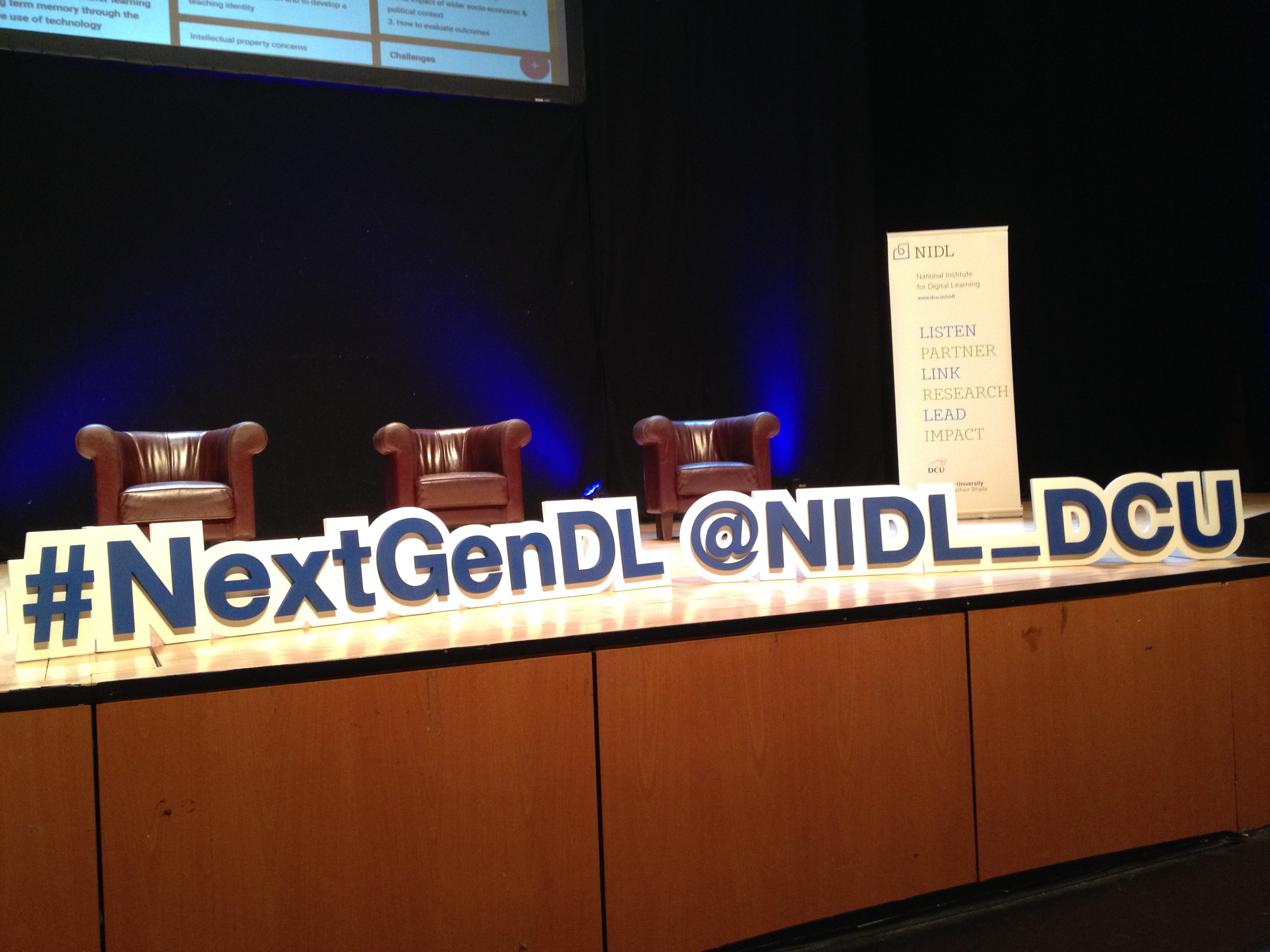
The following is a description of the doctoral workshop jointly hosted by the National Institute for Digital Learning (NIDL) and the new Institute of Education at Dublin City University (DCU) that took place on Wednesday 2nd November 2016 in the St. Patrick’s College, Dublin City University.

Description

Today, I attended a Doctoral Workshop jointly hosted by the National Institute for Digital Learning (NIDL) and the new Institute of Education at Dublin City University (DCU).  This workshop was primarily designed for prospective doctoral students who are thinking about embarking on either an EdD or PhD in the general area of Digital Learning.  The purpose of the workshop was to:

• answer common questions prospective students have about doctoral study
• identify/discuss potential research topics in the general area of digital learning
• help prospective doctoral students learn how to prepare research proposals.

In the course of the workshop, approximately 30 participants (including me) had an opportunity to discuss how to select the right institution, the right supervisors, the right topic and the most appropriate doctoral study option for their own circumstances.  The workshop was opened by Professor Mark Brown who gave an interesting talk on why he pursued a career in educational research.  A number of his DCU colleagues from Education / Digital Learning were in attendance including Dr. Deirdre Butler, Dr. Enda Donlon, Dr. Eamonn Costello as well as Visiting Professor Gráinne Conole.

Feelings

Eventually, it came to my turn to describe the topics within digital learning that I may be interested in pursuing a PhD.  I was quite nervous as I understood that I would be speaking to a number of respected scholars in the field of digital education.  I explained to those gathered at the workshop that I was interested in both research and development in the areas of personalised learning and eAssessment.

Evaluation

Professor Gráinne Conole and Dr. Eamon Costello both suggested that I speak to Professor Vincent Wade (Trinity College, Dublin) as he is an expert in the area of personalised and adaptive learning.

Professor Mark Brown suggested that I have a look at Fish Tree, a US Company specialising in personalised learning software.  He also suggested that I might pursue an interdisciplinary PhD (Computer Science and Education) and consider using the Castel research centre in DCU.  He also said that I should read what Stephen Downes and George Siemens have to say about personalised learning.

Analysis

We were told that the new DCU Education Department based in a new purpose-built building in the St. Patrick’s College Campus was incorporated on 01/10/16 and consists of 130 Staff and Postgraduate Research Students and 12 Research Centres.  This new education department will be headed up by Charlotte Holland with the title Associate Professor, Education, Dublin City University.  Her email address is charlotte.holland@dcu.ie.

Conclusions

Professor Mark Brown was at pains to point out that the process of deciding what one’s research question should be is a lengthy one.  He repeatedly stated that prospective PhD students should refine their research proposals by having lots of discussions with numerous research staff.  It was interesting to hear that a PhD student can choose his/her External Examiner.

Digital Learning Research Symposium

Digital Learning Research Symposium 2016

The following is a description of the keynote speech given by Professor Gráinne Conole that took place on Tuesday 1st November 2016 in the Helix, Dublin City University.

Description

The title of the keynote was:

Research Through the Generations: Reflecting on the Past, Present and Future

The keynote began with Professor Conole outlining what she considers to be the five transformative technologies that have shaped digital learning in the past 20 years:

(1) The Web / WiFi
(2) Learning Management Systems
(3) Mobile Devices
(4) OER/MOOCs
(5) Social Media

She went on to list the three facets of digital learning:

(1) Organisational Issues
(2) Pedagogical Aspects
(3) Underpinning Technologies

Professor Conole then considered the five stages that occur during the emergence of a research field (in this case, digital learning):

(1) Pre-subject area
(2) Beginnings
(3) Emergence
(4) Diversification
(5) Established

She stated that it is her belief that digital learning research is currently positioned between stages 4 and 5 (i.e. between diversification and established).

Professor Conole outlined the characteristics of digital learning research (drawing on a 2007 collaboration between herself and Martin Oliver):

(1) Changing
(2) Political
(3) Interdisciplinary (Education, Cognitive Psychology, Computer Science, Philosophy)
(4) Inclusion versus Exclusion
(5) Interactive

She referred to the state of ‘informed bewilderment’ that Manuel Castells considered modern society to be in.  The wider impact of digital learning may result in new models for education and the ‘unbundling’ of education.  Peering into the future, the UK report Innovating Pedagogy 2015 (which may be more nuanced than the Horizon reports) looks at the following areas:

(1) Artificial Intelligence
(2) Cloud Computing
(3) Augmented and Virtual Reality
(4) Learning Analytics
(5) Affective Computing

Photos

A couple of photos that I took at the conference:

dcu-conference-1-01-11-16dcu-conference-2-01-11-16

M2-Week 2-Home

Instructional Design & eAuthoring Module (Week 2)

The following is a reflection on the week immediately after the class that took place on Tuesday 1st November 2016 using Gibbs Reflective Cycle.

Tuesday 1st November 2016 – CONFERENCE

Description

Immediately after today’s class, I cycled to Dublin City University to attend a conference in The Helix.  I had previously registered online for this conference entitled The Next Generation: Digital Learning Research Symposium 2016.  Here us a link to Professor Mark Brown’s Conference Summary on Twitter.

Feelings

It was interesting to meet Professor Gráinne Conole at the conference.  She have a very interesting keynote called Research Through the Generations: Reflecting on the Past, Present and Future.  (Click on this link for my description of Professor Gráinne Conole’s keynote).  I had read some of Professor Conole’s work before including her association with The 7Cs of Learning Design.

Evaluation

It was informative to hear that digital learning is not yet considered to be an established field of research.  Professor Conole’ stated that it is her belief that digital learning research is currently positioned between stage 4 (diversification) and stage 5 (established).  I was already familiar with the NMC Horizon Report series having attended previous CESI and EdTech conferences.  During the keynote, Professor Conole referred to the Innovating Pedagogy 2015 (a UK report) that she reckons is more nuanced than the Horizon Report series.

Analysis

It was good to hear Richard Millwood’s HoTEL Project referred to at the conference.  I was already aware of this from Module 1 – Learning Theories.  I often find that I pay more attention to a topic when I hear it referred to on a second occasion by a different source.

Conclusions

Having enjoyed this conference, I think that I will register online for more digital events organised by the National Institute for Digital Learning in DCU.

Personal Action Plans

Put the dates for forthcoming events organised by the National Institute for Digital Learning into my diary.

Wednesday 2nd November 2016 – DOCTORAL WORKSHOP

Description

Today, I attended a Doctoral Workshop jointly hosted by the National Institute for Digital Learning (NIDL) and the new Institute of Education at Dublin City University (DCU).  This workshop was primarily designed for prospective doctoral students who are thinking about embarking on either an EdD or PhD in the general area of Digital Learning.  The purpose of the workshop was to:

• answer common questions prospective students have about doctoral study
• identify/discuss potential research topics in the general area of digital learning
• help prospective doctoral students learn how to prepare research proposals.

In the course of the workshop, approximately 30 participants (including me) had an opportunity to discuss how to select the right institution, the right supervisors, the right topic and the most appropriate doctoral study option for their own circumstances.  The workshop was opened by Professor Mark Brown who gave an interesting talk on why he pursued a career in educational research.  A number of his DCU colleagues from Education / Digital Learning were in attendance including Dr. Deirdre Butler, Dr. Enda Donlon, Dr. Eamonn Costello as well as Visiting Professor Gráinne Conole.

Feelings

Eventually, it came to my turn to describe the topics within digital learning that I may be interested in pursuing a PhD.  I was quite nervous as I understood that I would be speaking to a number of respected scholars in the field of digital education.  I explained to those gathered at the workshop that I was interested in both research and development in the areas of personalised learning and eAssessment.

Evaluation

Professor Gráinne Conole and Dr. Eamon Costello both suggested that I speak to Professor Vincent Wade (Trinity College, Dublin) as he is an expert in the area of personalised and adaptive learning.

Professor Mark Brown suggested that I have a look at Fish Tree, a US Company specialising in personalised learning software.  He also suggested that I might pursue an interdisciplinary PhD (Computer Science and Education) and consider using the Castel research centre in DCU.  He also said that I should read what Stephen Downes and George Siemens have to say about personalised learning.

Analysis

We were told that the new DCU Education Department based in a new purpose-built building in the St. Patrick’s College Campus was incorporated on 01/10/16 and consists of 130 Staff and Postgraduate Research Students and 12 Research Centres.  This new education department will be headed up by Charlotte Holland with the title Associate Professor, Education, Dublin City University.  Her email address is charlotte.holland@dcu.ie.

Conclusions

Professor Mark Brown was at pains to point out that the process of deciding what one’s research question should be is a lengthy one.  He repeatedly stated that prospective PhD students should refine their research proposals by having lots of discussions with numerous research staff.  It was interesting to hear that a PhD student can choose his/her External Examiner.

Thursday 3rd November 2016 – STORYBOARDING & VIDEO EDITING

Description

Wrote up minutes of Group Meeting 1 held on Saturday 29th October 2016 in the Westbury Hotel, Dublin 2

Downloaded files for Week 1 and Week 2 from Webcourses

Looked at the 10 minute video Visitors and Residents: Credibility (by David White, University of Oxford), from the link https://youtu.be/kO569eknM6U
This video explores perceptions relating to the legitimacy and currency of online information versus traditional sources. This is a required debate as more and more educational courses are moved online, e.g. MOOCs. In (say) 10 years time, will the survival of traditional universities be threatened in the same way as the newspaper industry is today?

Adobe Captivate – experimented with desktop app for authoring
Adobe Captivate Draft – downloaded and install iPad app
Adobe Captivate Draft – experimented with iPad app for storyboarding

Adobe Creative Cloud – downloaded and install iMac app and iPad app
Adobe Creative Cloud – first sign in using my existing Adobe Id

Created Adobe Captivate Draft test storyboard file (.CPDX file) on iPad
Uploaded this test storyboard file to Adobe Creative Cloud
Opened this Draft CPDX file in Adobe Captivate desktop app on iMac
Saved this Draft CPDX file as a CPTX file using Adobe Captivate desktop app on iMac

Reviewed YouTube Downloaders from
http://mac.eltima.com/list-of-best-youtube-downloaders.html
Downloaded and installed Total Video Downloader for Mac
Downloaded a 30 second waste management video from YouTube
Edited it to a 5 second video using iMovie

Simultaneously developed Composting course / lesson in Adobe Captivate and Microsoft Powerpoint
Published the course / lesson to an Adobe Captivate Project in HTML 5 format
Uploaded this Adobe Captivate Project to gerardkilkenny.ie/compost using the FileZilla FTP application for Mac
Tested that it works using the URL http://gerardkilkenny.ie/compost/index.html
It does work!

Friday 4th November 2016 – ePORTFOLIO DEVELOPMENT

Description

Today I set about more fully researching ePortfolios and blogs, with WordPress already chosen as my software tool of choice. I began constructing my ‘skeleton’ ePortfolio some weeks ago on my MSc Induction Day on 5th September 2016.  I added sections under the headings ‘Hopes’, ‘Fears’ and ‘Expectations’.  On ePortfolio Seminar Day on 18th October 2016, I began the process of creating new WordPress ‘pages’ and a ‘menu’ system that I based on the structure of the taught modules on the first year of the MSc in Applied eLearning programme.  The page / menu system that I created then looked like this:

Professional Development
Prior Learning
Personal Development Plan
Philosophy Statement
Programme Induction
Hopes
Expectations
Fears
Learning Theories
What is Learning
Constructivism
Behaviourism
Debate
Presentations
Instructional Design & eAuthoring
Introduction to Module
Storyboarding
eLearning Toolkit
Models of Instructional Design
Rapid Development
Top 100 Learning Tools
Elevator Pitches
Group Presentations

I also learned how to back up my WordPress website using Chapter 11 (Advanced WordPress) of the the excellent book:
Darryl, B. (2015). WordPress: web development for beginners. Leamington Spa: Easy Steps Limited.  See link below:
http://ineasysteps.com/products-page/all_books/wordpress-easy-steps-web-development-for-beginners-wordpress-4/

Saturday 5th November 2016 – LEARNING WORDPRESS

Description

Today, I resolved a problem whereby I had a database connection error when trying to access my website.  This occurred as a result of me changing the MySQL database password in the Control Panel of https://www.register365.com.  This part of the Control Panel uses phpMyAdmin which in turn provides support for a lot of MySQL functionality.  I had also changed this password the wp-config.php file on my website.  However, I eventually discovered that the password also needs to be updated in a table in the WordPress MySQL database. This means that the password exists in three different locations. If the password is not the same in all three locations, WordPress reports a database connection error.  I decided to revert to the original password.

I also discovered Citation Producer which converts information entered in fields (Author Name, Year of Publication, etc) into an APA reference.  Here’s the link:
http://citationproducer.com/apa-citation/cite/book.html

I learned the following aspects of WordPress:

Page Attributes (Parent)
Page Attributes (Order)
Home Page
Blog Posts
Header Image and Tag Line

Page Attributes (Parent and Order)
I changed the attributes on all WordPress ‘pages’ to reflect the menu structure I had early created via WordPress ‘appearance’ yesterday Friday 4th November 2016.

Front Page and Posts Page
WordPress automatically uses the blogroll as the homepage.
To force WordPress to go to your newly created homepage (‘Home’) on typing in the portfolio URL, do the following:
Select Settings > Reading

In the ‘Front page displays’ options presented:
Choose “A static page” for the ‘Front Page displays’
Select “Home” from the list of items (which are the WordPress pages you created) in the ‘Front Page’drop-downlist box.

We now also need to specify where the blog posts will go

Select “Blog” from the list of items (which are the WordPress pages you created) in the ‘Posts Page’drop-down list box.
Click the ‘Save Changes’ button.
After saving changes, when you type in the portfolio URL, the page should go to your new actual homepage.

Header Image and Tag Line
For ‘Header Image’, I had ‘Site Title’ and ‘Tagline as follows:

Site Title:  MSc in Applied eLearning
Tagline:  DIT Aungier Street

I then added a DIT logo via Appearance>Header.
The image had to be first uploaded to the Media Library.

M2-Week 2-Class

Instructional Design & eAuthoring Module (Week 2)

The following is a reflection on the Tuesday morning class that took place on 1st November 2016 from 10:00 to 13:00 using Gibbs Reflective Cycle.

Description

According to the hard copy Module Handbook 2016/17, today’s class was to address the following topics (and to include the guest lecturers Ciaran O’Leary and Patrick Walsh):

  • Why teach
  • Storyboarding and Personas
  • Learning Analytics

In reality, the topics for today’s class were:

  • Why teach
  • Storyboarding
  • Open Source Tools
  • Visitors and Residents: Credibility (Dave White, University of Oxford)

The first three topics were dealt with by Damian Gordon and the last topic was delivered by Pauline Rooney.

Personas and Learning Analytics were not dealt with today.  Ciaran O’Leary and Patrick Walsh did not appear today nor was any reference made to them.

The Why teach section of today’s class was an exploration of the reasons why we teach and the different teaching methodologies that can be used to teach a group of students.  Some reasons to teach are:

To enthuse students, to provide information, to assess students, to change student beliefs, to give the student group a sense of identity.

Some of the methodologies explored today were:

Ask the students to spend 3 minutes writing down the 3 most important ideas followed by 1 minute comparing ideas with the adjacent student.  Ask the students to reflect on how they are learning.

The Storyboarding section of today’s class looked at the definition of a storyboard (“a visual organizer, typically a series of illustrations displayed in sequence for the purpose of pre-visualizing a video, web-based training, or interactive media sequence”, the history of the storyboard (developed by Disney Studios in 1930s) and examples of storyboards for movies (Star Wars, Forrest Gump, Gladiator, Psycho, Watchmen and Apocalypse Now).

Some Open Source Tools referred to in today’s class were FocusWriter, MoodleCloud, Brackets, RedNotebook, Pidgin, TagSpaces and TaskBoard.  The only app that I had previously heard about was MoodleCloud.

For the last part of today’s class, Pauline Rooney showed a very interesting YouTube video by Dave White (University of Oxford) entitled Visitors and Residents: Credibility.

Feelings

I found today’s class quite disjointed.  The Why teach section felt like it was designed for a ‘dumbed-down’ introductory lecture to students about to experience teaching practice for the first time.  The Storyboarding section looked at storyboards that had been used for famous movies but failed to present any storyboards that had been used for eLearning artefacts.

Evaluation

I only found one out of the four topics in today’s class to be of any benefit:
– The YouTube video Visitors and Residents: Credibility (Dave White, University of Oxford).

This video will be of no benefit to me in relation to Instructional Design & eAuthoring.  However, I found the ideas that it explored in relation to how knowledge is valued and information sources are cited in bricks and mortar universities versus their equivalents in the digital world to be very interesting and highly stimulating.

Analysis

In my opinion, the entire class today should have been devoted to Storyboarding which is an essential pre-requisite to producing an eLearning artefact.  Moreover, storyboarding is one of the four items to be evaluated in this module and I am quite sure that it is something that is new to most, if not all, of the students in the class.   Why were the text editor open source tools FocusWriter, Brackets and RedNotebook referred to instead of storyboarding tools such as Microsoft PowerPoint (desktop app) and Adobe Captivate Draft (iPad app)?  Why was Pidgin which is a Chat app referred to at all?  TagSpaces is a digital note organizer.  TaskBoard is a task/project management tool.  MoodleCloud is the cloud based version of the popular Moodle LMS.  None of the aforementioned apps were illustrated, examined or compared – merely listed.

Conclusions

I am going to have to learn about Storyboarding without any ‘institutional help’.

Personal Action Plans

Explore the Open Source Tools referred to in today’s class: FocusWriter, MoodleCloud, Brackets, RedNotebook, Pidgin, TagSpaces and TaskBoard.

Experiment with Adobe Captivate Draft (Storyboarding App for iPad).

M2-Week 1-Home

Instructional Design & eAuthoring Module (Week 1)

The following is a reflection on the week immediately after the class that took place on Tuesday 25th October 2016 using Gibbs Reflective Cycle.

Description

I set up a group on WhatsApp for The Compostivists and invited Allesio Gemma, Michael McKeever and Rachel Maguire to join the group.  I think that it is important to use instant messaging if we want our group to be efficient and effective in its work over the coming weeks.

On Saturday 29th October 2016, our group had its first meeting (F2F) in the Westbury Hotel, Dublin 2.

Feelings

It was a productive and happy meeting as can be seen from this photograph:

photo_01-1
The Compostivists: Allesio Gemma, Gerard Kilkenny, Mick McKeever, Rachel Maguire.

Evaluation

Here are the minutes of the first meeting of The Compostivists:

Group Members:            Allesio Gemma, Gerard Kilkenny, Michael McKeever, Rachel Maguire

Group Project:                Composting

Meeting 1 (Date):            Saturday 29th October 2016

Meeting 1 (Location):    Westbury Hotel, Dublin 2

The following areas of composting will be considered in developing the group’s Instructional Design / eAuthoring project:

  • Why compost
  • What to compost
  • How to compost
  • Where to compost (school, house, apartment, etc)
  • Science of composting
  • Economics of composting
  • Best practice composting
  • Duration of composting
  • Composting versus ‘Black Bin’
  • How composting influences retail purchasing choices for the consumer

The group made the following decisions:

  1. The group name will be ‘The Compostivists’
  2. Allesio will email the group with a photo of the group taken at this meeting using Allesio’s camera phone.
  3. Communication methods will include email, Whats App, face to face meetings.
  4. Mick McKeever will ask Dolores McManus to set up a virtual class for the group in DIT’s Blackboad LMS so that the group can use file sharing, chat, etc.

The group decided to assign the following roles to group members and to organise the group’s work as follows:

Subject Matter Expert (SME):   Michael McKeever
Storyboarder:                              Allesio Gemma
Storyboarder:                              Rachel Maguire
Authoring Tools Specialist:       Gerard Kilkenny

See the following links in relation to the make-up of an eLearning team:

http://elearninguncovered.com/2013/07/e-learning-production-roles/
http://theelearningcoach.com/elearning_design/starting-an-elearning-department/
https://elearningindustry.com/elearning-dream-team-key-players

All members of the group will also have an instructional design role. Articulate Storyline will be used for storyboarding and Adobe Captivate will be used for authoring.

The next group meeting will be in DIT, Kevin Street at 11 am on Saturday 12th November 2016.

Analysis

This was a good first meeting for our group.  We decided how the group’s work would be shared out and what roles individuals within the group would have.  It is good that we now have a list of areas to be considered for the composting lesson.

Conclusions

The group decided to wait for two weeks to meet again as it will take at least that amount of time for Allesio and Rachel to create the first iteration of the storyboard.

Personal Action Plans

  • Now that I have located user guides and video tutorials for Adobe Captivate 9, begin the process of learning to use the different features of this tool.
  • Read the following book chapter with a view to writing an annotated bibliography of it.  This chapter will also inform the development of the eLearning resource using Adobe Captivate 9.

Clark, R. C., & Mayer, R. E. (2011) Applying the Contiguity Principle. In Clark, R. C., & Mayer, R. E., E-learning and the science of instruction: Proven guidelines for consumers and designers of multimedia learning. San Francisco, CA: Pfeiffer.


M2-Week 1-Class

Instructional Design & eAuthoring Module (Week 1)

The following is a reflection on the Tuesday morning class that took place on 25th October 2016 from 10:00 to 13:00 using Gibbs Reflective Cycle.

Description

The aim of the module is for the students to gain competence in planning, designing and developing eLearning resources/activities. The assessment consists of four items as follows:

(1) Storyboard (Group)
(2) The e-learning resource/activity ) (Group)
(3) Annotated bibliography (Individual)
(4) 1000 word reflection (Individual)

Later in the class, we were divided into three groups.  My group consists of four students as follows:  Allessio Gemma, Michael McKeever, Rachel Maguire and myself (Gerard Kilkenny).  We decided that the eLearning resource we will develop will be based on composting.  We decided to adopt the name The Compostivists for our group.

Feelings

It wasn’t too dramatic a change to move to a computer room (Room 2069) on the second floor of DIT Aungier Street.  For the first five weeks of the course (the Learning Theories module), the MSc and MA students were together in the LTTC Teaching Rooms on the fifth floor.  Now that the MSc and MA groups are separated for Module 2, it has now become apparent that there are 11 students following the MSc Applied eLearning degree course.   My group The Compostivists have already schedule its first meeting for this Saturday 29th October 2016 in the Westbury Hotel, Dublin 2.  I volunteered to carry out the development work for the eLearning resource (using Adobe Captivate) and Allesio signalled an interest in taking the lead on creating a storyboard for the resource.  I have a feeling that our group will work well together.

Evaluation

It was helpful that the lecturers on this module (Damian Gordon and Pauline Rooney) outlined how the module is to be assessed, and what is expected of the students, from the outset.  I discovered that I already have one of the books on the Essential Reading List:

Clark, R. C., & Mayer, R. E. (2011).  E-learning and the science of instruction: Proven guidelines for consumers and designers of multimedia learning. San Francisco, CA: Pfeiffer.

I began reading this book about a year ago before I applied for the MSc Applied eLearning course.

Damian showed the class how useful the Cite button in Google Scholar can be.  I hadn’t used Google Scholar before now but I hope to make good use of it in the weeks ahead.

Analysis

My initial analysis was that the assessment for Module 2 (Instructional Design) is much more demanding than for Module 1 (Learning Theories).  Module 2 has four assessment tasks compared to one assessment task for Module 1.  Moreover, Module 2 takes place over eight weeks with 10 ECTS to be gained whereas Module 1 took place over five weeks and had only 5 ECTS attached to it.  However, on closer analysis the four assessment items appear to be very integrated.  The storyboard precedes the development of the eLearning resource and the annotated bibliographies inform both of these items.  The 1000 word reflection is a meta-reflection of all of the individual reflections and this is something to be carried out at the end of the module.

Conclusions

I think that I am going to very much enjoy this module as I am very interested in, and have prior experience of, developing eLearning resources.   It will be important to carefully schedule the work required for this module in order to meet the deadlines for the assessment tasks.  In relation to the annotated bibliographies (5 to 7 to be done), Damian advised us to properly critique our annotations and to say if they were useful for our group project.  There should be three parts to each annotation:  summary, critique, evaluation.

Personal Action Plans

  • Locate user guides and video tutorials for Adobe Captivate 9
  • Source some of the eleven books on the Essential Reading list.


M1-Week 5-Home

This week I continued to work on my learning theories paper, which was due to be submitted via SafeAssign on Webcourses on 23rd October 2016.  The title of my paper is:

The van Hiele Model and Learning Theories: Implications for Teaching and Learning Geometry

M1-Week 5-Class

Earlier in the week, each student had to prepare a work-in-progress for today’s Learning Theories class.  Here is the text I prepared during the week:

Learning Theories Module – Paper 1 (Work-in-Progress Presentation)

Van Hiele Model – A theory that describes how students learn geometry

by Gerard Kilkenny

00 – Introduction (300 Words)

The purpose of this paper is to examine how the van Hiele model can be used as a framework in the teaching and learning of geometry to Junior Cycle Maths students.  It goes on to explore how elements of the classical learning theories of cognitivism and constructivism are embedded in the van Hiele theory.  In particular, it provides a comparative analysis of the Van Hiele model wih the theoretical learning frameworks of Gagne, Piaget, Bruner and Vygotsky.  The concluding section discusses possible implications of the Van Hiele model for eLearning design.

10 – Van Hiele Model (The 5 Levels) (480 Words)

Level 1 (Visualisation), Level 2 (Analysis) Level 3 (Abstraction), Level 4 (Deduction), Level 5 (Rigour).

20 – Van Hiele Model (The 4 Properties) (110 Words)

Property 1 (Fixed Sequence), Property 2 (Adjacency), Property 3 (Distinction), Property 4 (Separation).

30 – Van Hiele Model (The 5 Phases) (180 Words)

Phase 1 (Inquiry), Phase 2 (Directed Orientation), Phase 3 (Explanation), Phase 4 (Free Orientation), Phase 5 (Integration)

40 – The Gagne Van Hiele Connection

Gagné et al (1992, p.44) list “verbal information” as one of the “five kinds of learned capabilities” (R-40, p.44) and this can perhaps be mapped to van Hiele’s Level 0 where “the student can learn names of figures…” (Usiskin, 1982, p.4).  Similarly, the capability of identifying the diagonal of a rectangle is provided as an example of the capability “intellectual skill” by Gagné et al (1992, p.44) (R-40, p.44) which appears to have it’s equivalent in van Hiele’s Level 1 where students can understand that “rectangles have four right angles” (Hoffer, 1979, 1981) or that a rectangle “has two equal diagonals” (The Project Maths Development Team, 2014, p.32).

50 – Van Hiele and Piaget

Piaget (1953) (R-50) argues that children do not enter the formal operational stage until they are 14 years of age and that they cannot learn formal proofs before this period. Van Hiele (1985) (R-51) describes similar properties in his penultimate geometric level deduction although he does not specify which age pupils reach this level.  In Irish secondary schools, students generally don’t study formal proofs in geometry until second or third year when they are approximately 14 years old.  (R-04)

60 – Van Hiele, Vygotsky and Bruner

Van Hiele questioned the notions of growth being linked with biological maturation. Instead, in ways that have much in common with Vygotsky (1978), he saw development in terms of students’ confrontation with the cultural environment, their own exploration, and their reaction to a guided learning process. (p.112)

70 – Neuroscience and Teaching

What can neuroscience teach us about teaching? (Dr. William O’Connor)

http://icep.ie/wp-content/uploads/2011/02/What-can-neuroscience-teach-us-about-teaching.pdf

80 – Implications for ICT and Instructional Design

Book (Principles of Instructional Design), Book (Michael Allen’s Guide to e-Learning) Software (GeoGebra).

Key References

Curran, S. (2014). Is The Van Hiele Model Useful in Determining How Children Learn Geometry? Munich: GRIN.

Gagné, R. M., Briggs, L. J., & Wager, W. W. (1992). Principles of Instructional Design. Fort Worth: Harcourt.

Piaget, J. (1953). The Origin of Intelligence in the Child. London: Routledge and Kegan Paul.

Project Maths Development Team (2015). Teacher Handbook First Year. Retrieved September 25, 2016, from  http://www.projectmaths.ie/documents/handbooks/firstyearhandbook2015.pdf

Usiskin, Z (1982). Van Hiele Levels and Achievement in Secondary School Geometry.  University of Chicago

Yazdani, M. A. (2008).  The Gagne – van Hieles Connection: A Comparative Analysis of Two Theoretical Learning Frameworks.  Journal of Mathematical Sciences & Mathematics Education, 3(1), 58-63.

M1-Week 4-Home

Here is the text I prepared, as required, on a single A4 page for Week 5 of the Learning Theories module on 11th October 2016:

Learning Theories Module – Paper 1 (Work-in-Progress Presentation)

Van Hiele Model – A theory that describes how students learn geometry

by Gerard Kilkenny

00 – Introduction (300 Words)

The purpose of this paper is to examine how the van Hiele model can be used as a framework in the teaching and learning of geometry to Junior Cycle Maths students.  It goes on to explore how elements of the classical learning theories of cognitivism and constructivism are embedded in the van Hiele theory.  In particular, it provides a comparative analysis of the Van Hiele model wih the theoretical learning frameworks of Gagne, Piaget, Bruner and Vygotsky.  The concluding section discusses possible implications of the Van Hiele model for eLearning design.

10 – Van Hiele Model (The 5 Levels) (480 Words)

Level 1 (Visualisation), Level 2 (Analysis) Level 3 (Abstraction), Level 4 (Deduction), Level 5 (Rigour).

20 – Van Hiele Model (The 4 Properties) (110 Words)

Property 1 (Fixed Sequence), Property 2 (Adjacency), Property 3 (Distinction), Property 4 (Separation).

30 – Van Hiele Model (The 5 Phases) (180 Words)

Phase 1 (Inquiry), Phase 2 (Directed Orientation), Phase 3 (Explanation), Phase 4 (Free Orientation), Phase 5 (Integration)

40 – The Gagne Van Hiele Connection

Gagné et al (1992, p.44) list “verbal information” as one of the “five kinds of learned capabilities” (R-40, p.44) and this can perhaps be mapped to van Hiele’s Level 0 where “the student can learn names of figures…” (Usiskin, 1982, p.4).  Similarly, the capability of identifying the diagonal of a rectangle is provided as an example of the capability “intellectual skill” by Gagné et al (1992, p.44) (R-40, p.44) which appears to have it’s equivalent in van Hiele’s Level 1 where students can understand that “rectangles have four right angles” (Hoffer, 1979, 1981) or that a rectangle “has two equal diagonals” (The Project Maths Development Team, 2014, p.32).

50 – Van Hiele and Piaget

Piaget (1953) (R-50) argues that children do not enter the formal operational stage until they are 14 years of age and that they cannot learn formal proofs before this period. Van Hiele (1985) (R-51) describes similar properties in his penultimate geometric level deduction although he does not specify which age pupils reach this level.  In Irish secondary schools, students generally don’t study formal proofs in geometry until second or third year when they are approximately 14 years old.  (R-04)

60 – Van Hiele, Vygotsky and Bruner

Van Hiele questioned the notions of growth being linked with biological maturation. Instead, in ways that have much in common with Vygotsky (1978), he saw development in terms of students’ confrontation with the cultural environment, their own exploration, and their reaction to a guided learning process. (p.112)

70 – Neuroscience and Teaching

What can neuroscience teach us about teaching? (Dr. William O’Connor)

http://icep.ie/wp-content/uploads/2011/02/What-can-neuroscience-teach-us-about-teaching.pdf

80 – Implications for ICT and Instructional Design

Book (Principles of Instructional Design), Book (Michael Allen’s Guide to e-Learning) Software (GeoGebra).

Key References

Curran, S. (2014). Is The Van Hiele Model Useful in Determining How Children Learn Geometry? Munich: GRIN.

Gagné, R. M., Briggs, L. J., & Wager, W. W. (1992). Principles of Instructional Design. Fort Worth: Harcourt.

Piaget, J. (1953). The Origin of Intelligence in the Child. London: Routledge and Kegan Paul.

Project Maths Development Team (2015). Teacher Handbook First Year. Retrieved September 25, 2016, from  http://www.projectmaths.ie/documents/handbooks/firstyearhandbook2015.pdf

Usiskin, Z (1982). Van Hiele Levels and Achievement in Secondary School Geometry.  University of Chicago

Yazdani, M. A. (2008).  The Gagne – van Hieles Connection: A Comparative Analysis of Two Theoretical Learning Frameworks.  Journal of Mathematical Sciences & Mathematics Education, 3(1), 58-63.

M1-Week 4-Class

The following are photos of the posters used during today’s debate:

The motion was a quotation from William Edwards Deming who was an American engineer, statistician, professor, author, lecturer, and management consultant.

The Motion

My group opposed the motion and I had the job of writing up points 1 to 9 as well as debating against the nominee from the group supporting the motion.  My group won the debate!

Against (Points 1 to 5)
Against (Points 6 to 9)

We also looked at Kolb’s Learning Cycle in today’s class.

Kolb’s Learning Cycle