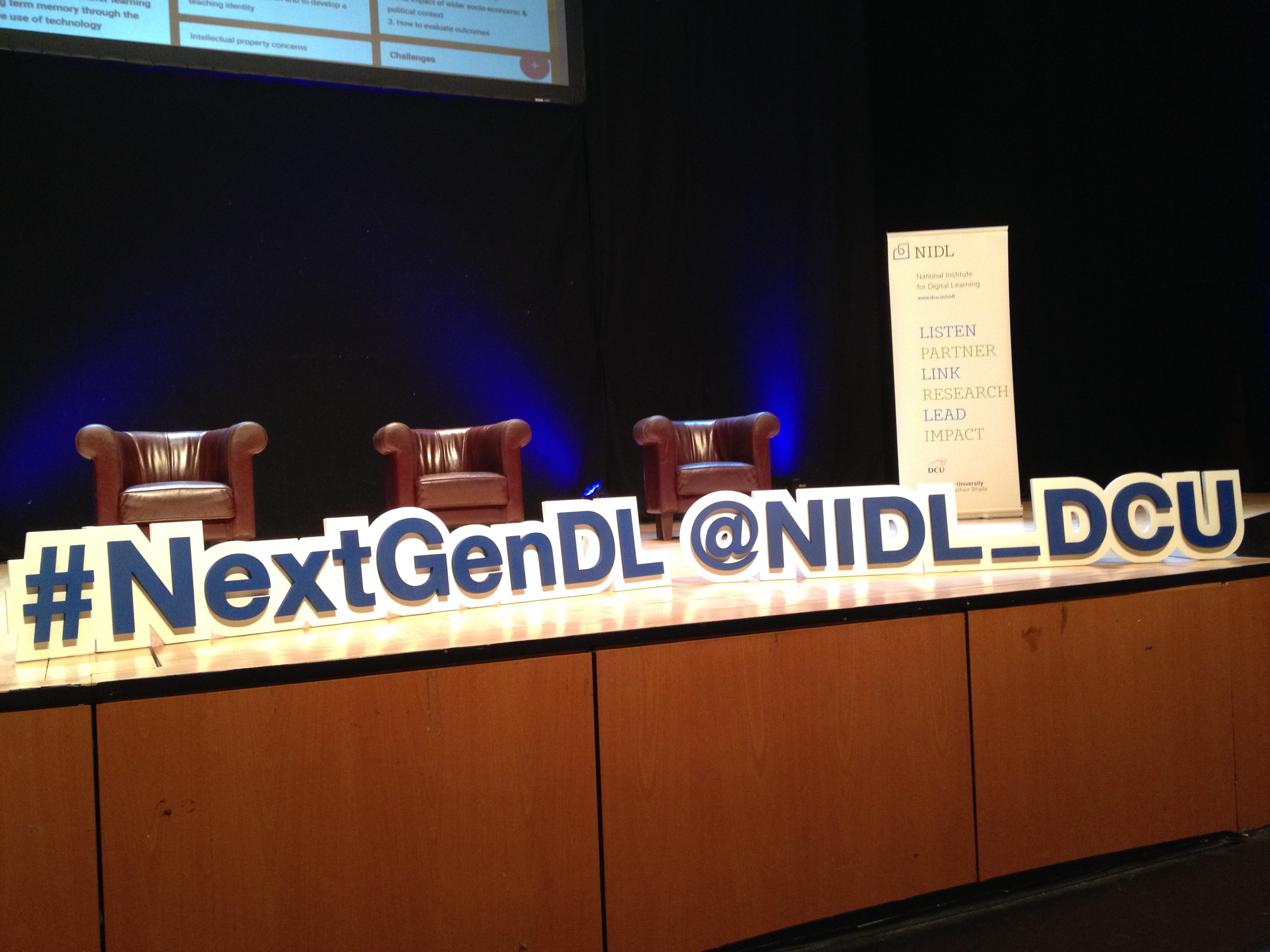
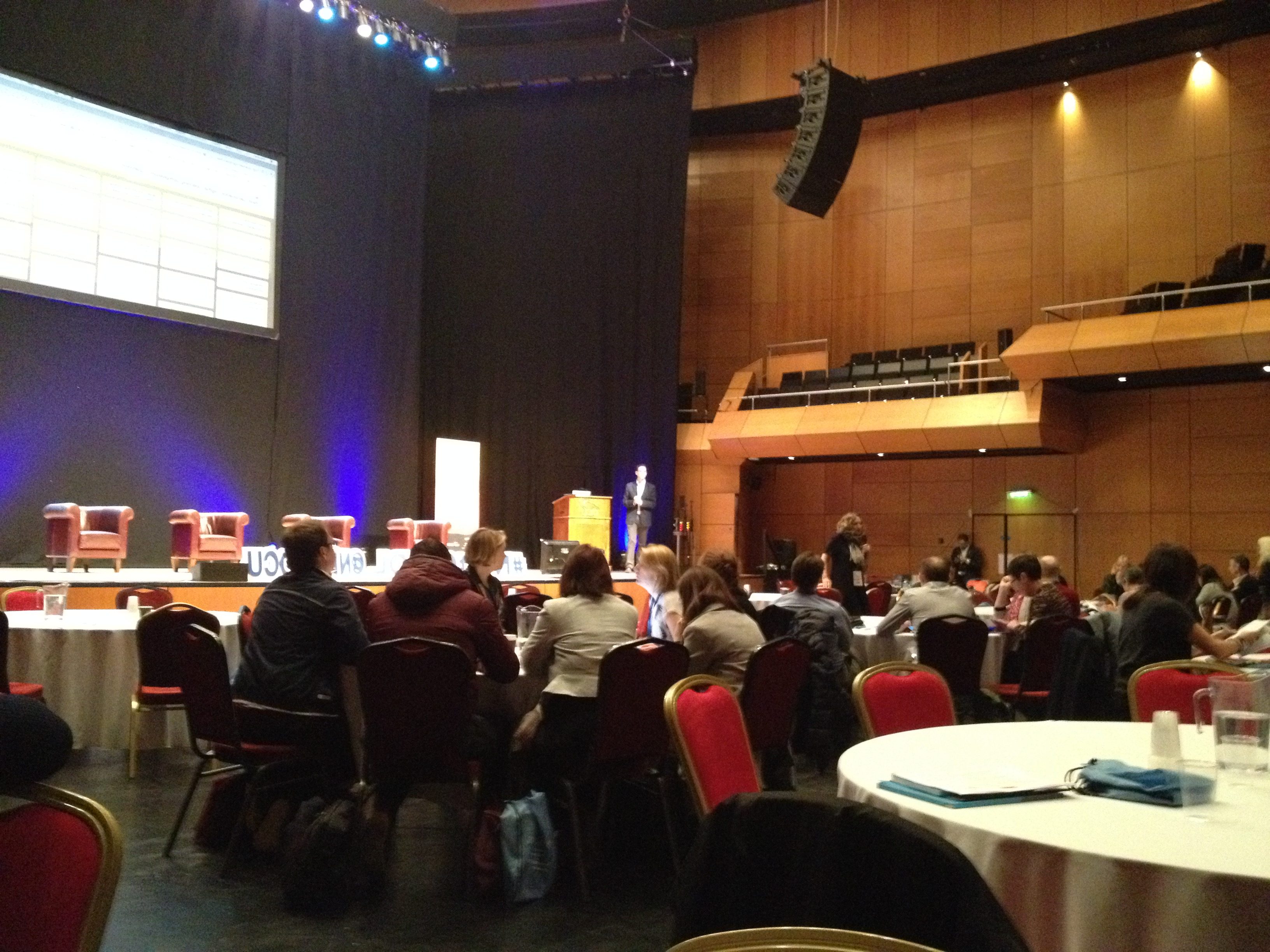
PDST Technology in Education Conference
The following is a description of the PDST Technology in Education Conference that took place on Wednesday 23rd November 2016 in the The Convention Centre Dublin.

Description
PDST/PDST Technology in Education, in conjunction with the ICT committee of NAPD, hosted a conference for school leaders providing an opportunity for all attendees to consider a number of whole school issues in advance of annual funding being released by the Department of Education and Skills (DES) as per the Department of Education and Skills Digital Strategy for Schools (2015 – 2020). I attended this full day conference in The Convention Centre Dublin.
Summary of reflections of today’s conference:
(1) ePortfolios for TY students
(2) Microsoft OneNote (Microsoft Classroom) for ePortfolio.
(3) A constructivist pedagogical orientation is encouraged according to Seán Gallagher, Deputy Director, PDST.
(4) €210 million for all primary and secondary schools over five years.
(5) Probably €15,000 per year for my school.
(6) A WiFi infrastructure in my school is likely to cost in the region of €25,000.

Feelings
I hadn’t been in The Convention Centre Dublin before. It’s an extremely impressive large light-filled modern building overlooking the River Liffey on Dublin’s north quays.


Evaluation
This was a very good conference. I learned about a Transition Year pilot project (which is due to go mainstream in 2017) where students use ePortfolios for storage, workspace and showcase instead of hard copy folders of their work for the year. I discovered that one of the schools that presented at the conference (Colaiste Muire, Ennis) use OneNote Online for their ePortfolios. This is an Office 365 tool and Colaiste Muire is an Office 365 School. My own school is an Office 365 School so it makes sense that my school evaluates OneNote Online as a tool for creating ePortfolios.


Analysis
The conference began with the following two keynotes. The first keynote by Jim Devine (who is based in Joint Research Centre (JRC), Seville) looked at an EU digital learning project (DigComp 2.0). The second keynote from Seán Gallagher looked at the situation nationally and in particular the funding in relation to the current five year National Strategy (2015 – 2020). He mentioned that the PDST try to champion a constructivist pedagogical orientation and favour ongoing assessment. There are ‘good practice’ videos on the PDST website. He also looked at the Scoilnet website (created and managed by PDST Technology in Education) and in particular the following digital material on this website:
– Irish Times Archive
– Maps
– Science hooks
– Licenced Digital Content (encyclopaedias, etc)
– Census At School
– Arts in Education

Conclusions
It was interesting to see that ePortfolios are now being encouraged in second level schools as well as being something that is an integral part of my MSc in Applied eLearning degree course.

Personal Action Plans
Inform the Transition Year Co-ordinator in my school about the ePortfolio pilot project.
Encourage my colleagues to register for the excellent Scoilnet website.